Meet Velaro: A Full Sitecore Site, Built End to End by My Agents
My agent team took a whole Sitecore site — Velaro — from an idea to a published, live head app in a single run. What got built, how smooth it went, and why the dogfood runs before it earned that.
A few days ago I sat and watched an entire Sitecore website come into existence — the cloud environment, the code, the components, the copy, the imagery, and finally the go-live — while my main job was to say "yes, continue" at the right moments and keep an eye on the gates. No copy-paste marathon. No hand-wiring templates at 11pm. I approved, I checked, I sipped coffee.
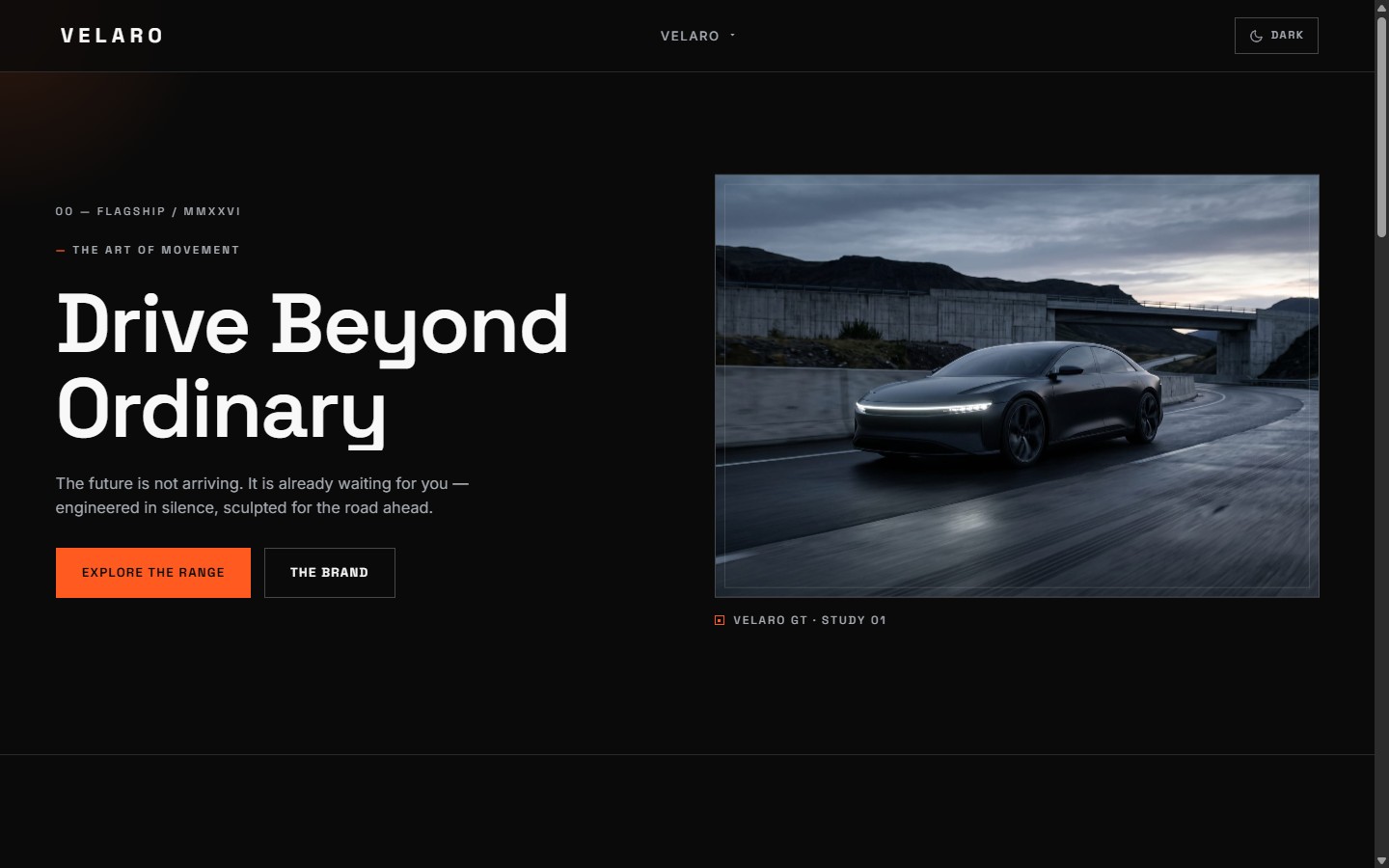
The site is called Velaro — a fictional premium car brand, "Drive Beyond Ordinary", the kind of dark, cinematic marque site you would expect a real agency to spend weeks on. It is live right now at velaro-brand.vercel.app, running on the Sitecore Content SDK against a real SitecoreAI tenant.
And here is the part I actually care about: this is the first time my full agentic pipeline took a Content SDK head app all the way — idea to a published, live site — in one unbroken run inside Claude Code. Not "the AI wrote some components." The whole thing.
My job was the gates, not the typing.
What actually got built
Velaro is not a landing page with a hero and three cards. It is a proper little brand world: a cinematic home, a "Five machines. One idea." range page, five individual model pages, a special-editions showcase, a technology narrative, a brand story, and a contact surface. Dark and light theme, system-aware, hydration-safe. Motion that respects reduced-motion. Real accessibility, checked at test time, not promised in a README.
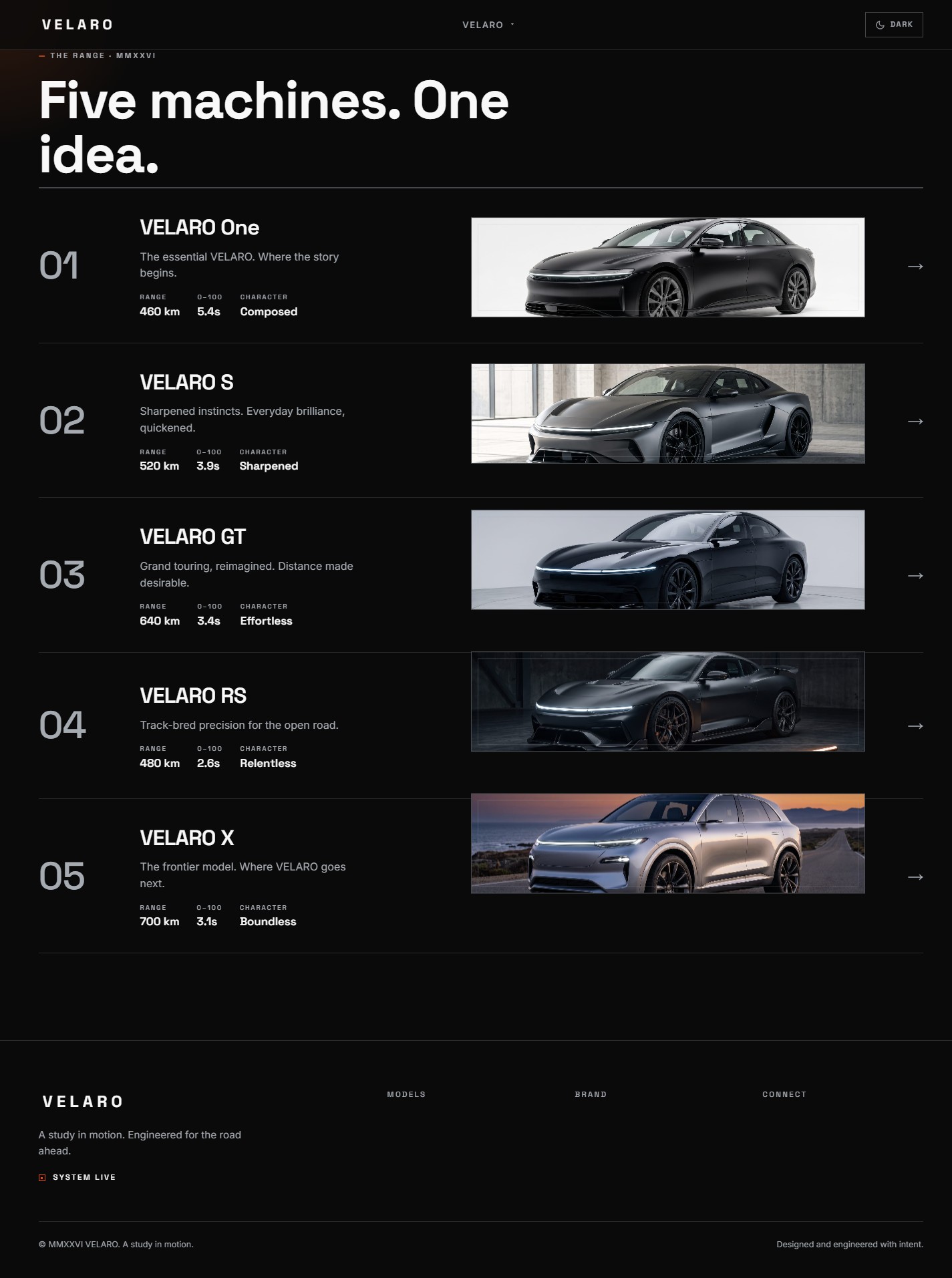
The nice structural trick under the hood: the five model detail pages are one template, rendered five times. Add a sixth car and it is a content task, zero code. That is the sort of decision the architect agent makes and the developer agent honours — and it is exactly the kind of thing that separates "a page an AI generated" from "a site a team would actually maintain".
I will not lay out every component here — that is what the Sitecore and Agentic sections of this site are for. The short version: net-new components, built React-first, then bound to their real Sitecore datasource contracts, with the words and the images authored straight into the tenant afterwards.
How the run actually went
The interesting bit is not the site. It is that a small team of agents handed the work between each other, each with its own role and its own contract, and nobody had to leave the IDE.
That "preview-first, publish-last" ordering matters more than it looks. For a long time the scary part of these runs was the go-live — the moment content, layout and media all have to agree on a live edge context or the whole thing 404s. Now it is a named, gated step at the very end, owned by the DevOps agent, instead of a thing I hold my breath through.
one continuous run
one reusable template
before ship
commissioned + reviewed
The honest part
It was not magic, and I would not trust anyone who tells you their version was. Two things went sideways mid-run. A cloud token quietly expired and had to be refreshed before provisioning could finish. And a genuinely annoying publishing quirk on a shared tenant meant some freshly authored pages did not project onto the edge the way they should — a workaround via the content API sorted it, and it got written down so the next run knows about it.
Both got handled. More importantly, both got recorded — because the pipeline is built to report what actually happened, not to present a clean green screen and hope. A gate that gets skipped is logged as skipped. "It builds" is never allowed to pose as "it works". To be honest, that reporting discipline is the feature I am proudest of, more than any single component.
Mocks are faithful to types. A live tenant is faithful to reality. Those are not the same artifact.
This is not a first try — it is a payoff
Here is the thing I really want to land, because it is easy to look at Velaro and think "cool demo". Velaro went this smoothly because a whole string of rougher runs came before it and paid their learnings back into the framework.
The Marketplace apps taught the pipeline how to dogfood itself and how to gate on a real tenant instead of a green test run. Then the first Content SDK sites — Northwind, Umbra, Verdure and friends — each hit a fresh wall: how to stand up the cloud topology in the right order, how to author content through the MCP and verify it landed, how to keep a component alive in both themes, how to split the build so a real-tenant check sits between phases instead of after all of them. Every one of those walls became a permanent rule, a new agent, or a sharper contract.
Umbra was the first time the complete Sitecore flow ran start to finish — but it shipped with caveats, a short list of things still open. Velaro is the one where the same flow ran and went all the way to a published, live site. That gap between the two is not luck. It is the dogfood loop doing exactly what it is for: the newest capability re-enters the loop, and the next run inherits a smoother road.
Every first run pays rent. Velaro is the run that got to spend it.
Where this goes next
I am deliberately not showing you all the internals here — partly because it would be a very long post, and partly because the fun is in what comes next. The obvious frontier is generating a whole site and its content model from close to nothing, in one pass, until the tooling makes the provisioning half a first-class primitive. Velaro proved the loop closes for a full site with authored content and real imagery. Doing it faster, and for stranger briefs, is the next dogfood run — and yes, that one will surface its own new wall, and yes, that wall will become the next rule.
If you want the longer, structured version — the flow, the agents, the decisions — it lives in the Sitecore and Agentic sections, with a Velaro case study sitting next to the others.
For now: go click around the live site for a minute. Then remember that almost none of it was typed by a human hand — it was planned, argued about, built, written, illustrated and shipped by a team of agents, with me holding the gates. That still feels a little unreal to me, and I have been doing this for a while now. 😉
More to come — and, as always, let me know what you think. Especially the bits you think I got backwards.
- Agentic
- SitecoreAI
- Content SDK
- Next.js